Why Most Weight Loss Meal Plans Fail Before the Food Even Arrives
Most diet plans aren’t defeated by a lack of willpower—they collapse under the weight of hundreds of tiny, invisible decisions made long before you lift a fork. Psychologists call this decision fatigue, and it’s the reason a perfectly motivated Monday can turn into a drive-thru Friday. Every choice you make—what to buy, what recipe fits your macros, whether that chicken breast is 4 ounces or 8—quietly drains the same finite reservoir of self-control you need to stick to the plan. By the time dinner rolls around, your brain is exhausted, and takeout feels less like a cheat and more like a surrender.
Then there’s what researchers describe as portion blindness. When you plate your own food at home, the average person underestimates calorie intake by 20–40%, according to studies published by the NIH. Without visual anchors—a pre-portioned container, a clear demarcation between “one serving” and “the whole pan”—your brain defaults to what looks reasonable on a 12-inch dinner plate, which is almost always more than you need. You can log every bite into an app and still be off by hundreds of calories a day, not because you’re dishonest, but because eyeballing portions is genuinely that hard.
This is where a structured meal service stops being a luxury and starts functioning as what behavioral scientists call scaffolding: an external system that removes the friction points where diets typically fail. When someone else handles the planning, the shopping, and the measuring, you’re no longer spending mental energy on choices that don’t move the needle. You simply heat and eat. That single shift eliminates the three biggest adherence killers—decision fatigue, portion guesswork, and the “what’s for dinner” panic that sends you scrolling through delivery apps at 6:45 PM. The food arriving at your door isn’t just convenience; it’s a pre-built environment that makes the path of least resistance the one that aligns with your goals.
The Adherence Framework: What Separates a Delivery Service from a Weight Loss System
Most people hunt for a meal service by comparing menus, macros, and price per serving. That’s the trap. The real differentiator between a service you abandon in week two and one that changes your trajectory is how aggressively it removes the friction that killed your last diet. Think of it as an adherence framework built on three non-negotiable pillars.
Decision removal is the first. A true weight loss system doesn’t hand you a marketplace of 40 rotating options and wish you luck—it pre-selects or narrows your meals so you never stare at an app at 6 p.m., willpower drained, defaulting to the highest-calorie choice. Portion certainty is the second pillar. Calorie-locked, single-serving containers eliminate the silent sabotage of “just a little more,” which research from the NIH has repeatedly linked to passive overconsumption. If you’re still eyeballing a serving from a family-style tray, you’re still dieting on hard mode.
This is precisely where meal kits fail as weight loss tools. Kits preserve the very cooking friction—chopping, sautéing, timing—that triggers takeout defaults on high-stress days. When a 45-minute recipe with a sink full of dishes stands between you and dinner, your brain will negotiate its way into delivery pizza. Fully-prepared meals eliminate that negotiation.
Finally, reframe how you think about taste. Taste satisfaction isn’t a luxury; it’s an adherence variable. A Cleveland Clinic report notes that unsatisfying, bland meals are a primary driver of compensatory snacking—the handful of crackers, the late-night cereal bowl—that quietly erases a 300-calorie deficit. If you’re white-knuckling through meals you hate, you’re not building a system; you’re just waiting to crack.
Fully-Prepared Calorie-Controlled Services: Best for Eliminating All Cooking Friction
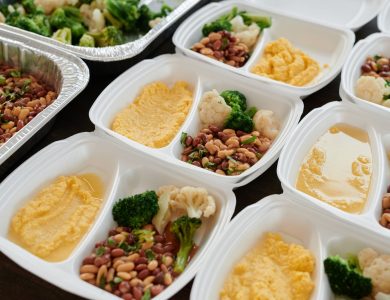
If you’ve ever stared into a fridge at 7:45 PM, exhausted, with a meal kit’s worth of raw chicken and unwashed kale staring back, you already know how that story ends—with a delivery app open on your phone. That’s the friction point fully-prepared calorie-controlled services are engineered to eliminate entirely. These aren’t meal kits that require assembly; they’re complete, chef-prepared meals that move from refrigerator to microwave to plate in under three minutes, with zero chopping, pan-frying, or measuring required.
Services like Factor and Fresh N Lean dominate this category by delivering fresh, never-frozen meals built around explicit macro targets—typically 500–600 calories with 30–40 grams of protein per serving. Factor structures its menu around high-protein, moderate-carb plates like herb-crusted chicken with broccoli and cauliflower mash, while Fresh N Lean offers broader dietary filters including keto, paleo, and Whole30-approved options. Both print the full nutritional breakdown on every container, so you’re never guessing whether that butter chicken fits your deficit. That transparency functions as a guardrail: when the math is done for you, portion blindness gets corrected without you needing to weigh or log anything.
The behavioral advantage here is straightforward. According to the Cleveland Clinic, the single strongest predictor of diet adherence isn’t willpower or motivation—it’s the number of decisions and physical steps required between the impulse to eat and actually eating. Fully-prepared models collapse that chain to its bare minimum: open, heat, eat. That removes the “I don’t have time” excuse that kills most meal kit subscriptions by day four, when the novelty of cooking wears off and the reality of cleanup sets in.
The trade-off is per-meal cost. Expect to pay $11–$15 per meal for most plans, which runs higher than grocery-based meal kits that offload prep labor onto you. But that premium buys you something meal kits can’t: near-zero food waste. There are no raw proteins going gray in the meat drawer, no herbs wilting in the crisper, no half-used jars of specialty sauce you’ll never touch again. For anyone whose history with dieting includes a graveyard of spoiled ingredients and the guilt that comes with them, that difference alone can justify the price. You’re buying certainty—and when the alternative is another $35 takeout order, the math starts to look less like a luxury and more like a calculated swap.
Medically-Backed Programs: Best When a Doctor’s Warning Requires Structured Intervention
If you’re reading this section, the stakes have likely shifted from wanting to drop a few pounds to needing a clinical intervention because your physician drew a hard line. When a health scare recedes from immediate crisis to background worry, internal motivation tends to fade with it—and that’s precisely where medically-backed programs earn their place. These aren’t just meal deliveries; they’re structured behavioral protocols designed to remove every ounce of decision-making while your health depends on compliance.
Programs like Optavia and HMR (Health Management Resources) operate on a fundamentally different model than standard meal services. HMR, for example, has been used in over 70 clinical studies and relies on a very low-calorie, high-volume eating strategy that replaces conventional food with pre-portioned entrées and shakes during the initial weight-loss phase. Optavia’s flagship plan similarly reduces daily intake to roughly 800–1,200 calories through shelf-stable “fuelings” eaten every two to three hours. The clinical design isn’t just about calorie math—it’s about deliberately breaking your relationship with portion sizes, grocery stores, and the mental negotiation that derails most diets by 3 p.m.
What separates these services from a standard subscription box is the mandatory coaching layer. HMR embeds weekly group coaching sessions into its pricing, while Optavia pairs you with an independent coach who typically has personal experience with the program. According to the Cleveland Clinic, sustained weight loss correlates strongly with consistent accountability touchpoints—not because the advice is novel, but because knowing someone will review your progress creates a psychological backstop when your initial scare-fueled resolve starts to wane. You’re no longer letting down just yourself; you’re showing up for a conversation you’ve committed to.
Be clear-eyed about the trade-offs. These programs usually require a minimum commitment period, and the monthly cost ranges from $350–$500 for full meal replacements. They work best when you genuinely need a complete, temporary break from conventional food decisions—not a flexible plan you can adapt around dinner parties. If your doctor has made it clear that weight loss is no longer optional, the structure here functions less like a meal service and more like outpatient support.
Macro-Targeted Plans: Best When You Want Fat Loss Without Losing Muscle or Energy
Most “diet” delivery services solve for a single number on the nutrition label: calories. The problem is that a 1,200-calorie day built from white pasta and low-fat dressing will strip muscle, tank your metabolism, and have you staring into the vending machine glass by 3 p.m. Macro-targeted plans flip the equation—they treat protein and fiber as the non-negotiables and build the calorie deficit around them, not the other way around.
Services like Trifecta and ICON Meals were built for people who view food as performance fuel, not just caloric math. Their standard meals routinely deliver 30–40 grams of protein with 6–10 grams of fiber, a combination that directly addresses the two biggest adherence killers in a calorie deficit: hunger and energy crashes. According to the Cleveland Clinic, higher-protein diets preserve lean muscle mass during weight loss and improve satiety more effectively than standard-protein diets at the same calorie level. That means you’re losing fat, not just weight, and you’re not white-knuckling through the afternoon on willpower alone.
The practical difference shows up fast. A generic 350-calorie meal might leave you functional for 90 minutes. A 350-calorie meal with 35 grams of protein and 8 grams of fiber—like the lean bison bowls or salmon with quinoa you’ll find in these plans—keeps blood sugar stable and hunger hormones suppressed for 3–4 hours. That’s the window that kills takeout orders. Prices for macro-targeted services typically run $11–$16 per meal, which is roughly what you’d spend on a fast-casual lunch, just engineered to keep you out of a metabolic ditch.
Diet-Specific Services: Best for Keto, Paleo, or Plant-Based Paths Without the Research Burden
If you’ve ever stared at a restaurant menu trying to reverse-engineer whether a dressing has hidden sugar or a sauce was thickened with flour, you already know the mental drain of dietary compliance. The real risk isn’t a lack of willpower—it’s the slow erosion of vigilance that happens when you’re tired, hungry, and just want to eat without conducting an ingredient audit. Diet-specific meal services remove that friction entirely by acting as non-negotiable guardrails. When every container that arrives is already vetted for your protocol, the “one bite won’t hurt” rationalization loses its power because the option simply isn’t there.
For strict paleo adherents, Snap Kitchen offers fully-prepared meals that eliminate grains, dairy, soy, and refined sugar without requiring you to decode labels—their entire menu is built on the autoimmune protocol’s framework, so nothing slips through. If you’re committed to plant-based eating, Fresh N Lean delivers organic, vegan meals that are pre-portioned for calorie targets ranging from roughly $8–$13 per meal, sparing you the common trap of carb-heavy vegan convenience foods that stall weight loss. Keto followers get a similar safety net from Factor, where meals hover around 10g or fewer net carbs, making accidental glucose spikes virtually impossible.
One trade-off worth acknowledging: niche services typically rotate through smaller menus than their mainstream competitors. Taste fatigue is real, and a Cleveland Clinic review on sustainable weight loss emphasizes that dietary boredom is a top predictor of abandonment. Your smartest move is to treat the first week as a low-risk trial—order the minimum commitment, test whether you genuinely look forward to the meals, and only then commit to a longer subscription. A protocol you can’t stomach is no protocol at all.
How to Vet a Weight Loss Meal Service Before You Commit to a Subscription
Most weight loss meal services sell hope, not results—and they’re counting on you not reading the fine print until after you’ve handed over your credit card. A smart pre-purchase audit takes ten minutes and will save you from a fridge full of overpriced, undersized meals you resent eating.
1. Hunt for the nutrition panel before you see the sales page
If a service doesn’t display full calorie and macronutrient breakdowns on every individual meal listing—not buried in a PDF, not averaged across a “plan”—treat it as a red flag. Transparent services show you exactly what you’re getting before checkout. Ones hiding behind phrases like “chef-crafted” or “nutritionist-approved” are often relying on what researchers call a health halo: the assumption that a meal is lower-calorie or healthier simply because it’s marketed for weight loss. According to the Cleveland Clinic, this cognitive bias leads people to underestimate calories by 20–30% when a food carries a health claim. Don’t let pretty branding fill in the blanks.
2. Read the cancellation policy like a contract, not a formality
Rigid subscription terms that require calling customer service during business hours, or that lock you into four-week minimums to access the advertised price, aren’t inconveniences—they’re retention tactics. Services confident in their product offer straightforward skip and cancel options directly in the account dashboard. If you have to hunt for the cancellation flow, the company is banking on inertia to keep you paying. Look for language like “pause any week” or “cancel anytime online.” If it’s not there, assume it’s deliberate.
3. Search reviews for portion reality, not just pretty photos
Ignore star ratings for a moment and search specifically for comments about satiety. Filter reviews for words like “still hungry,” “snacked after,” “portions,” and “filled up.” A photogenic meal that leaves you foraging through your pantry an hour later isn’t a meal service—it’s an expensive appetizer. Third-party forums like Reddit’s weight loss communities are particularly useful here because posters have no incentive to sugarcoat their experience.
4. Treat your first order as a paid trial, not a commitment
Order the smallest available plan with zero add-ons. Yes, the per-meal price looks worse than the discounted multi-week bundle. That higher unit cost is insurance against being stuck with 18 meals you hate. If the service works for you after one full cycle, the long-term discount will still be there—and you’ll know whether you’ll use it.
Red Flags That Signal a Meal Service Will Sabotage Your Weight Loss
Some meal services market themselves as weight-loss solutions but are engineered for retention through hyper-palatability—food so calibrated with fat, salt, and sugar that it subtly undermines the calorie deficit you’re paying them to create. The first red flag is “chef-designed” or “gourmet” language that appears without a transparent calorie ceiling per meal. If a service won’t clearly state that most entrées fall under, say, 550 calories, assume the menu is designed for taste first and satiety within a deficit second.
Logistics matter just as much as macros. Watch for shipping models that require you to be home for a perishable delivery within a narrow window. Missed deliveries create immediate waste—and a frustrating, last-minute scramble that sends you straight to takeout. According to the FDA, perishable food left at unsafe temperatures for more than two hours should be discarded, which means a single delayed shipment can wipe out an entire week’s plan and trigger exactly the decision fatigue you were trying to escape.
Also flag services where the smallest subscription plan still exceeds your realistic weekly meal needs. A fridge full of “obligation food” quickly breeds resentment—you’re staring at containers you don’t want, paying for meals you won’t eat, and feeling guilty about both. Finally, avoid programs that push proprietary supplements, powders, or bars as meal replacements without full ingredient sourcing and third-party testing disclosures. If the science isn’t public, the business model is the product—not your results.
The First Two Weeks: How to Transition Without Triggering a Binge or Burnout
You’ve unboxed your meals, cleared the fridge, and feel a surge of motivation. But the real test hits around day four or five, when the novelty wears off and your brain starts craving the hyper-palatable salt, sugar, and fat combo it’s used to. The key is not white-knuckling through it—it’s easing your system into the change so you don’t trigger a binge or total burnout.
Replace One Meal at a Time
Going all-in on day one can shock your digestive system and your schedule. Start by swapping out your most decision-fatigued meal—for most people, that’s dinner. You arrive home mentally drained, and that’s precisely when takeout apps win. Let the meal service handle dinner for the first three to four days. Once that feels automatic, add lunch. A gradual ramp gives your gut microbiome and your daily rhythm time to adapt without rebellion.
Ride Out the Palate Recalibration
According to the Cleveland Clinic, your taste buds regenerate roughly every 10 days, which means the first five to seven days on a lower-sodium, lower-sugar meal plan involve a genuine neurological adjustment. Your palate is literally waiting for the hyper-rewarding processed-food hit it’s conditioned to expect. During this window, food may taste bland—not because the meals are bad, but because your baseline is skewed. Don’t judge the service in week one. By day seven, your sensitivity resets, and you’ll start tasting natural sweetness in roasted vegetables and herbs that previously seemed muted.
Schedule a Conscious Indulgence
Deprivation is the fast track to a binge. The moment you feel trapped by a program, your brain rebels. Pre-plan one “conscious indulgence” per week—a single meal or treat you genuinely look forward to, eaten slowly and without guilt. This isn’t a cheat day; it’s a pressure-release valve. When a craving hits on a Tuesday, knowing you have a planned indulgence on Saturday makes it easier to stay the course. You’re not saying “no” forever—you’re saying “not yet.” This small psychological shift prevents the all-or-nothing spiral that causes most dieters to abandon ship by week two.
When to Pivot: Signs You’re on the Wrong Service and What to Switch Instead
Quitting a meal service outright usually happens silently—you skip a week, then another, and the containers stack up in the fridge while you order takeout. The problem isn’t you. It’s a mismatch between what the service provides and what your brain and body need to stay consistent. Recognizing the specific friction point lets you swap your plan, not abandon the entire model.
You’re raiding the pantry every night
If you finish dinner and immediately start hunting for snacks, the base meals are too small—not nutritionally inadequate, just calorically below your current maintenance threshold. This doesn’t mean you need a different company. It means you need the next calorie tier or a higher-protein plan within the same service. Most providers offer plans ranging from roughly 1,200 to 2,000 calories per day; bumping up by 200–300 calories often eliminates the 9 p.m. pantry raid without stalling progress. The Cleveland Clinic notes that overly aggressive calorie restriction can increase cravings and reduce adherence, which is exactly what you’re experiencing.
The sight of your own fridge makes you sigh
Taste fatigue sets in faster than most services admit—usually by week two or three, when you’ve cycled through the handful of meals that genuinely appealed to you. The meals aren’t bad; you’ve just exhausted the variety. Instead of quitting, rotate to a competitor with a significantly larger rotating menu. Some services cap at 20–25 weekly options; others offer 50 or more. Switching between two services every few weeks keeps novelty high without forcing you back into meal planning. This is a strategic rotation, not a failure of willpower.
Every swipe of your credit card stings
When the cost triggers daily guilt, the financial stress cancels out any physiological benefit the food provides. Cortisol doesn’t care about your macro ratios. The fix isn’t canceling—it’s downgrading. Drop to fewer meals per week (say, 4–6 instead of 10–14) and supplement the remaining meals with simple, repeatable grocery staples you already know how to prepare. Alternatively, switch to a simpler prepared service that runs $8–$11 per meal instead of the premium $13–$15 range. You’re not cheaping out; you’re removing a stressor that was undermining the entire effort.