Why Most Diets Fail Before Wednesday
It’s 5:15 p.m. on a Tuesday. You haven’t thought about dinner, your calorie budget is tight, and the fridge holds wilting spinach and a block of cheese. That moment—the one where you grab your phone and open a delivery app—isn’t a character flaw. It’s the predictable endpoint of a system that placed the entire mental load on you and offered no operational backup.
Researchers studying decision fatigue have shown that the average adult makes over 200 food-related decisions daily, each chipping away at a limited reservoir of self-control. By late afternoon, your prefrontal cortex is running on fumes. You can know exactly what a 400-calorie balanced plate looks like; if assembling it requires 45 minutes of chopping, cooking, and negotiating with a picky eater, that knowledge becomes useless. The gap between knowing what to eat and having it ready is where most weight loss attempts collapse.
Generic macro targets make this worse. Being handed a sheet that says “160g protein, 50g fat” and a list of approved foods is not a plan—it’s a homework assignment. It forces you to become a part-time nutritionist and logistics coordinator at the exact moment your bandwidth is gone. A program that provides only numbers but no pre-portioned meals, no sequenced daily menu, no delivery—essentially asks you to build the plane while flying it. That’s not a willpower problem. That’s a design failure.
The Three Operational Models of Meal-Included Programs
Most people who say “meal plans didn’t work for me” tried a model fundamentally incompatible with their life. The program wasn’t the problem—the operating system was. Understanding how these programs function lets you self-diagnose where previous attempts went wrong, so you don’t repeat the same mismatch.
Fully-Prepared Delivery
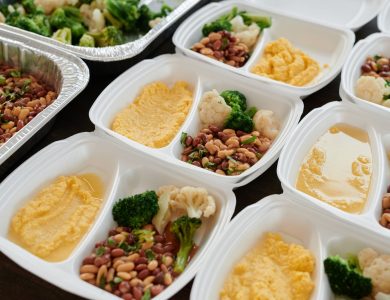
Fresh, pre-cooked meals arrive on a recurring schedule—typically weekly. You store them in the refrigerator and heat them in two to three minutes. There is zero grocery shopping, zero chopping, and no cleanup beyond a fork and the container. Programs run $10–$15 per meal. If your primary failure mode is decision fatigue that sends you to DoorDash by 7 p.m., this model removes the point of collapse entirely.
Meal Plans with Grocery Lists
You receive a structured weekly menu with recipes and a pre-built shopping list—often with macro and calorie counts calculated. But you still walk the aisles, cook every meal, and manage portions yourself. The value is eliminating the planning and math, not the labor. These subscriptions cost $10–$30 per month plus your normal grocery bill. They work if you enjoy cooking or need to feed a family from the same plan, but demand the highest level of intrinsic motivation.
Hybrid Meal Kits
Pre-portioned raw ingredients and recipe cards shipped to you, requiring 20–40 minutes of assembly and cooking. Nothing is pre-cooked, but everything is pre-measured—no food waste and no “how much chicken do I need” paralysis. Pricing lands at $8–$12 per serving. According to a Cleveland Clinic review of weight management strategies, the portion-control advantage of pre-measured kits can be useful for calorie-deficit adherence—provided you have the baseline kitchen comfort to execute the recipes.
| Model | Time Commitment | Cost Range | Cooking Skill Needed |
|---|---|---|---|
| Fully-Prepared Delivery | 2–5 min per meal | $10–$15/serving | None |
| Meal Plans + Grocery Lists | 45–90 min per meal | $10–$30/month + groceries | Moderate to high |
| Hybrid Meal Kits | 20–40 min per meal | $8–$12/serving | Basic to moderate |
The right question isn’t “which program is best?” It’s “which model removes the specific friction that has derailed me before?”
Fully-Prepared Delivery: When You Need Food to Just Show Up
If your diet history reads like a graveyard of good intentions that died in the drive-thru line, fully-prepared delivery is engineered for you. This model removes every friction point between you and a calorie-controlled meal. No recipe to read, no produce to wash, no frantic 7 p.m. math trying to guess whether that chicken breast is 4 ounces. The food arrives fresh, portioned, and ready to heat.
You’re the ideal candidate if you’re navigating 12-hour shifts, back-to-back travel weeks, or caring for aging parents while holding down a job—scenarios where “meal prep on Sunday” sounds like a cruel joke. The core value is cognitive offloading. The mental load of constant decision-making physically exhausts the brain’s prefrontal cortex, the region you need for impulse control. Outsourcing the “what and how much” preserves that bandwidth for sticking to the plan.
When vetting a service, look beyond marketing photos. First, confirm menus are designed by registered dietitians with a clear calorie budget per meal. Second, demand flexibility; a rigid plan that forces meals you hate will fail within two weeks. A legitimate program lets you pause, skip weeks, or swap dishes without penalty. Finally, be wary of programs that are glorified snack boxes. The goal is real, recognizable food—roasted salmon with vegetables, not a powder suspended in water.
The hidden risk is palate fatigue. Before committing to a multi-week bundle, order the smallest available package—often a 5- or 6-meal trial—and eat every single one. If you find yourself dreading the microwave beep, that’s a taste quality failure, not a willpower failure. The right program won’t make you feel like you’re white-knuckling through bland punishment.
Meal Plans with Grocery Lists: Structure Without the Kitchen Takeover
If your kitchen still needs to function for a spouse who isn’t dieting or kids who’d riot over cauliflower rice, a meal plan with a grocery list bridges rigid diet rules and real life. Instead of shipping a box of pre-portioned salmon, this model hands you a weekly roadmap: exact recipes, a single shopping list organized by aisle, and often a prep-day schedule that tells you to brown the ground turkey while the quinoa cooks. You still cook, but you never stare into the fridge at 6 p.m. wondering what to make while your blood sugar drops and your resolve crumbles.
The power is in the swap. A well-designed plan builds a dinner that works for everyone—you eat the lean protein and roasted vegetables, the kids get the same protein with a side of pasta or a tortilla, and you’ve dirtied one set of pans. According to the Cleveland Clinic, the single biggest predictor of diet adherence isn’t willpower—it’s whether your eating pattern creates friction with your household’s routines. These plans eliminate the friction of separate meals without forcing the whole family onto your calorie deficit.
Budget-conscious shoppers win here. Removing the middleman packaging and shipping means your weekly grocery bill typically lands at $60–$110 for a family, compared to $130–$200+ for fully prepared delivery. The key features that prevent the usual week-three collapse are batch-cooking triggers and “cook once, eat twice” labels built into the recipes. You’re not told what to eat; you’re told when to double the recipe and freeze half so Thursday’s exhaustion doesn’t send you to the drive-thru.
But here’s the honest diagnosis: this model fails if your real problem isn’t planning, but time poverty. If you’re working 12-hour shifts, managing caregiving, or too depleted by 7 p.m. to hold a knife, a grocery list won’t save you. It’ll become another piece of paper you feel guilty about ignoring. In that case, you don’t need a better plan. You need food that arrives cooked.
Hybrid Kits: The Middle Ground That Saves Weeknight Sanity
If full-service delivery feels too hands-off but traditional meal plans have left you paralyzed in the produce aisle, hybrid kits eliminate the mental math without killing the joy of cooking. These services ship pre-portioned, macro-calculated ingredients with recipe cards that clock in at 15–20 minutes of active prep time—enough to feel involved, not enough to dread walking into the kitchen after a 10-hour day.
The critical distinction is between standard meal kit services and their calorie-conscious counterparts. A standard kit might land at 800–900 calories per serving with rich sauces and generous starches, while weight-loss-specific options from providers like Blue Apron’s Wellness line or Green Chef’s Keto + Calorie Smart plans cap meals in the 500–650 calorie range with higher protein ratios. If you’ve felt burned by a meal kit that tasted great but moved the scale in the wrong direction, the issue was likely the nutritional architecture, not the format.
Who Hybrid Kits Actually Work For
This model shines for couples without young children, or for single professionals who enjoy cooking but hate the cognitive load of planning. You’re not negotiating with a picky five-year-old over zucchini noodles; you’re executing a simple, 6-step process someone else engineered to hit your deficit. The trade-offs are real. Packaging waste remains a legitimate sustainability concern—those perfectly portioned sour cream packets come at an environmental cost—and per-serving prices typically run $11–$14, positioning kits above DIY grocery runs but well below restaurant takeout.
Diagnose Your Past Failures Before You Swipe Your Card
Most people don’t fail at weight loss because they lack willpower. They fail because they keep buying a solution that doesn’t match the specific way their routine falls apart. Before you invest anywhere from $10 to $150 a week, pin down exactly where your previous attempts derailed.
The Four Most Common Failure Patterns
Pattern 1: “I never made it to the store.” If your week imploded before a single vegetable hit the pan—or you stood in the aisle, overwhelmed, and walked out with coffee and crackers—you don’t need a meal plan. You need fully prepared delivery where food arrives cooked, portioned, and ready in under three minutes. Without that, you’re one missed shopping trip away from takeout.
Pattern 2: “I cooked, but ate double portions.” You prepped the healthy recipe, then unconsciously served yourself enough for two people. This is a portion-control failure, not a cooking failure. Your fix is a pre-portioned, calorie-locked model—either fresh delivery or a kit where every ingredient is measured. According to the NIH, portion size is one of the strongest environmental predictors of calorie intake. Eyeballing it rarely works when you’re starting out.
Pattern 3: “My family wouldn’t eat it.” You ended up making two dinners, resented it, and quit by Thursday. A rigid, single-serving delivery box will fail you again. You need a flexible meal-plan service with adaptable recipes and grocery lists—something you can scale up for the whole table while keeping your own plate aligned with your deficit. The key is a plan that lets you swap ingredients or add simple sides without breaking the macro math.
Pattern 4: “The food was gross after day three.” You unsubscribed because the meals tasted like salted cardboard or the texture degraded by midweek. Taste compliance is the biggest predictor of long-term adherence. Your next pick needs a taste-first vetting model: look for programs that offer à la carte ordering with no mandatory minimums, or fresh (never exclusively frozen) options with a satisfaction guarantee that lets you skip weeks without penalty.
Quick Decision Map
Ask yourself one question: What was the exact moment I threw in the towel last time?
- It happened before cooking → Fully prepared meal delivery
- It happened on the plate → Pre-portioned calorie-locked kits
- It happened at the family table → Flexible meal plans with scalable grocery lists
- It happened on the fork → Taste-first, à la carte fresh delivery
Match your biggest breakdown point to the operational model that neutralizes it. That’s how you stop paying for someone else’s solution and start funding one that fits your life.
What Experts Say About Long-Term Adherence vs. Quick Results
If you’ve cycled through diets that promised dramatic results in two weeks, you know the pattern: the scale drops fast, you feel a fleeting rush of control, and then life happens. A birthday dinner, a late work night, a single skipped delivery—and the entire system collapses. The missing ingredient wasn’t willpower. It was a program designed around how human behavior works.
Registered dietitians frame this as a battle between adherence and aggression. The American Heart Association and the Academy of Nutrition and Dietetics both emphasize that the “best” diet is the one you can follow without psychological burnout. A 500-calorie deficit sustained for six months will always outperform a 1,000-calorie deficit abandoned after three weeks. Aggressive restriction triggers biological pushback—spiking ghrelin, slowing resting metabolic rate—that makes weight regain statistically likely. A program built for adherence keeps hunger manageable and preserves enough flexibility for real meals with your family.
The most dangerous programs aren’t the ones that fail immediately. They’re the ones that work temporarily but teach you nothing transferable. If a plan requires proprietary bars, branded shakes, or sealed meal containers indefinitely, ask yourself: what happens when the shipments stop? According to the National Weight Control Registry, individuals who maintain significant weight loss overwhelmingly adopt strategies they can sustain independently—not protocols that tether them to a single company’s supply chain forever.
Before you commit, evaluate the transition architecture. A responsible program will either offer a structured off-ramp—a maintenance phase with fewer delivered meals and more self-prepared options—or explicitly teach you the portion-sizing and grocery-decision skills you’ll need later. Red flags include contracts that forbid all outside foods, refusal to share nutritional breakdowns, or language that frames returning to “normal” eating as a moral failure. Quick results feel urgent now, but a system that builds competence will serve you long after the boxes stop arriving.
Red Flags That Signal a Wasted Investment
Before you hand over your credit card, scan the fine print for predictable deal-breakers. The most common reason people quit isn’t a lack of willpower—it’s the sinking realization that the food is inedible, the hidden fees are suffocating, or the plan was never designed around real meals.
No Macros, No Purchase
If a company won’t show you a sample nutrition label before you sign up, walk away. A legitimate program should transparently display calorie counts and macronutrient breakdowns without forcing you into a sales funnel. If you can’t verify that meals sit in a reasonable 350–500 calorie range for weight loss, you’re gambling, not investing.
The Auto-Ship Trap
Watch for checkout flows that lock you into a minimum number of weekly deliveries with punitive cancellation fees. Some operators require notarized letters or charge a $75–$150 early termination penalty. If the cancellation policy is buried in a 4,000-word terms-of-service page rather than displayed in a simple FAQ, that friction is intentional.
Shakes Masquerading as Meals
According to the Cleveland Clinic, liquid meal replacements can serve as a short-term bridge, but sustainable weight management relies on whole foods that require chewing and trigger satiety hormones. A program billing itself as a “meal plan” should deliver predominantly solid, recognizable food—not a box of powdered shakes and processed bars that leaves you hungry within 90 minutes.
Stock Photos Instead of Real Food
If the only images you can find are polished marketing renders or identical shots recycled across affiliate blogs, pause. Search for independent, unboxing-style videos or customer-tagged photos on social media. If the actual plated meal looks like a frozen airline dinner and reviews consistently mention watery textures, the gap between promise and plate is too wide to justify the $10–$15 per serving price tag.
Medically Impossible Guarantees
Any program promising a consistent 5-pound weekly loss without a prescription or medical supervision is selling a fantasy. Rapid drops beyond 1–2% of body weight per week typically involve water manipulation or severe restriction that backfires. If the marketing language sounds like it belongs on a pharmaceutical ad but requires no doctor’s clearance, you’re looking at a compliance risk, not a health solution.
How to Vet Taste Quality Before You Commit
Nothing tanks a weight loss effort faster than a fridge full of meals you dread eating. You’re not buying convenience; you’re betting your consistency on whether the salmon tastes like cardboard. Before you commit, pressure-test taste without locking yourself into a subscription you’ll regret.
Start with the smallest possible order, even if the per-meal price stings. Most services discount heavily when you buy 12 or 18 meals at once, but committing to that volume before you’ve tasted a single bite is a gamble. Paying $12–$16 per meal for a one-week trial is cheaper than wasting $150 on a bulk order that ends up in the trash. If the company believes in its product, it will offer a sampler box or a single-week intro without forcing a long-term contract.
Go beyond the curated testimonials on the brand’s website. Search YouTube and TikTok for “unboxing” videos and “week-in-the-life” reviews where real people film themselves heating and eating the food in real time. Watch for facial expressions when they take the first bite—enthusiasm is hard to fake. Pay attention to reviewers who share your dietary profile. A glowing review from someone doing keto tells you nothing if you’re eating Mediterranean. You need to see how the food holds up for your way of eating, not whether someone lost weight on it.
Finally, scan the fine print for a satisfaction guarantee. Some programs will refund or credit your first order if you hate the taste, which transforms the decision from a risky leap into a controlled experiment. If a service won’t stand behind its flavor with a clear policy, consider that a signal in itself.
Your First Week: A Setup Protocol That Prevents Day-One Derailment
Most people sabotage their weight loss program before they eat a single meal. They start on a Monday with good intentions, but by Wednesday, leftover pizza in the fridge and a stressful 2 PM meeting have them reaching for familiar comfort food. The fix isn’t more willpower—it’s a structured setup protocol that eliminates the need for it.
The Weekend Purge
Saturday or Sunday, clear your kitchen of competing food. Donate unopened items, toss the rest, or move them to a garage freezer if family members still want them. According to the Cleveland Clinic, environmental cues are one of the strongest predictors of dietary adherence—you’re far less likely to order takeout if opening your fridge presents you with your program’s ready-to-eat meal rather than a decision between that and last night’s mac and cheese.
Lock In Your Eating Cadence
Your program will specify meal timing. Block those windows in your calendar as non-negotiable appointments for week one. If the plan calls for breakfast at 7:30 AM, lunch at 12:30 PM, and dinner at 6:30 PM, treat those like client meetings. The goal is to train your hunger hormones to a predictable rhythm before life’s chaos has a chance to override them.
Schedule One Strategic Flex
Deprivation backfires. Pick one moment—a Friday dinner out or a Saturday brunch—where you’ll eat off-plan but within guardrails you set in advance. Knowing you have a planned release valve on day five makes it infinitely easier to stay compliant on days one through four.
Track Adherence, Not Outcomes
For the first seven days, ignore the scale entirely. Your only metric is whether you ate what the program told you, when it told you. That’s it. Water weight fluctuations in week one can swing 2–5 pounds and will mess with your head. Checking a simple yes/no box each day builds the momentum of a streak—and that psychological win is what carries you into week two.