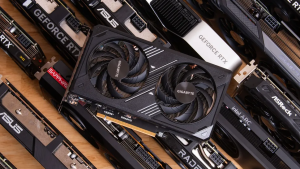
If you’re searching for the recommended graphics cards for ultra settings, the short answer depends on your target resolution: the Nvidia GeForce RTX 5060 Ti 16GB excels at 1080p and 1440p, the AMD Radeon RX 9070 XT handles 1440p with headroom, and the Nvidia GeForce RTX 5080 is the current pick for 4K ultra gameplay [2][9]. However, prospective buyers should be aware that the GPU market is currently strained by industry-wide memory chip shortages, driving up prices and limiting stock availability [2]. This guide breaks down the best options at each performance tier, factors that influence ultra-settings performance, and what US gamers should consider before purchasing as of 2026.
What “Ultra Settings” Actually Means
Ultra settings refer to the highest preset of graphical fidelity available in a PC game, maximizing parameters such as texture resolution, shadow quality, anti-aliasing, draw distance, ambient occlusion, and ray tracing where supported. While these settings produce the most visually impressive image, they also impose substantial demands on a GPU’s processing power, memory bandwidth, and VRAM capacity. According to analysis from Apex Gaming PCs, the visual difference between high and ultra is often marginal in motion, while the performance cost can be steep — making the choice of GPU especially important for players who insist on maxing out every slider [9].
Running modern AAA titles at ultra requires significantly more horsepower than high or medium presets, particularly when ray tracing or path tracing is enabled. Resolution further compounds the demand: 4K ultra can require two to four times the GPU resources of 1080p ultra in the same title. Understanding this scaling is essential before committing to a specific card, because mismatching your GPU to your monitor’s resolution either wastes performance headroom or leaves you with stuttering frame rates.
The Current State of the GPU Market
Before recommending specific cards, it’s important to address current market conditions. According to Rock Paper Shotgun’s most recent analysis, the graphics card market is experiencing notable price hikes and stock shortages driven by industry-wide memory chip shortages, leading reviewers to describe this as “a lousy time to upgrade” despite real performance gains from technologies like DLSS 4.5 and FSR Redstone [2]. US buyers should expect to pay above MSRP for popular SKUs and may encounter limited availability at major retailers.
This environment makes value calculations more complex than usual. A card that was reviewed favorably at its launch price may be a poor purchase at inflated street prices, while previously overlooked SKUs sometimes represent better value due to more stable inventory. The RTX 4070 Ti 12GB, for instance, was previously assessed as “painfully overpriced” and limited at 4K resolutions [7]. Buyers should compare current US street prices against benchmarked performance per dollar rather than relying on launch-day reviews alone.
Best GPU for 1080p Ultra Settings
For 1080p gaming at ultra settings with a target of 60 frames per second or higher, the Nvidia GeForce RTX 5060 Ti 16GB is currently recommended as the best all-rounder, particularly when paired with DLSS 4 upscaling [2]. The 16GB VRAM buffer is meaningful at this tier because modern AAA titles increasingly exceed 8GB of memory usage at ultra texture settings, even at 1080p resolution.
For budget-conscious buyers, the Intel Arc B580 has emerged as the best cheap graphics card, matching or beating the pricier RTX 4060 in raw performance — especially when paired with a recent-generation CPU — though it lacks the superior upscaling quality of Nvidia’s DLSS [2]. Historical benchmarks from Tom’s Hardware forums noted that even older mid-range cards like the Radeon HD 7950-7970 or GTX 670-680 could maintain constant 60 FPS at 1080p ultra in their era [6], but those references no longer apply to modern AAA titles, which routinely demand DirectX 12 Ultimate features and ray tracing pipelines that legacy hardware cannot accelerate.
Best GPU for 1440p Ultra Settings
For 1440p ultra gaming, the AMD Radeon RX 9070 XT is the current top recommendation, offering strong rasterization performance and improving ray tracing capabilities thanks to AMD’s latest architecture [2]. It pairs well with FSR Redstone, AMD’s most recent upscaling technology, which has narrowed the gap with DLSS in supported titles [2].
The AMD RX 9060 XT in its 16GB configuration has also been noted as the best value GPU available, providing a strong price-to-performance ratio that makes it attractive for 1440p gamers who don’t need bleeding-edge frame rates [1]. The RTX 5060 Ti 16GB remains a viable cross-tier option for 1440p as well, particularly in titles with strong DLSS 4 support, where AI-accelerated upscaling effectively boosts performance without major image quality loss [2]. Buyers should consider which games they play most often, as ray tracing performance and upscaling support vary meaningfully between Nvidia and AMD ecosystems.
Best GPU for 4K Ultra Settings
4K ultra is the most demanding mainstream PC gaming target, and the Nvidia GeForce RTX 5080 is the current recommendation for this resolution [2][9]. Multiple reviewers describe the RTX 5080 as the class of card most serious players should aim for if 4K ultra is the goal [9]. Its combination of raw shader throughput, large VRAM buffer, and DLSS 4 frame generation support makes it capable of sustaining playable frame rates in even the most demanding ray-traced titles.
It’s worth noting that older high-end cards previously marketed for 4K gaming, such as the RTX 4070 Ti 12GB, have been described as hobbled for 4K performance due to insufficient VRAM and memory bandwidth limitations [7]. This is an important caution for US buyers shopping the used market: a card’s tier name doesn’t guarantee 4K viability, and VRAM capacity has become a critical specification as game install sizes and texture budgets continue to grow.
Special Considerations for Ultrawide Monitors
Ultrawide monitors — typically 21:9 or 32:9 aspect ratios at resolutions like 3440×1440 or 5120×1440 — render substantially more pixels per frame than standard 16:9 displays. The pixel count of 3440×1440 falls between 1440p and 4K, while 5120×1440 approaches 4K territory. According to Decogear’s analysis, a mid-range card such as an Nvidia GTX 1660 or AMD RX 5600 is the minimum recommendation for basic ultrawide gaming [5], but those entry-level cards will not deliver ultra settings at acceptable frame rates in modern AAA titles.
For ultrawide ultra-settings gaming as of 2026, gamers should target at minimum a card capable of strong 1440p ultra performance — the RX 9070 XT or RTX 5060 Ti 16GB tier — and ideally step up to the RTX 5080 class for the wider 32:9 super-ultrawide displays. Driver-level support for ultrawide resolutions is mature on both Nvidia and AMD platforms, so the deciding factor is raw performance rather than compatibility.
What Experts Recommend
Industry reviewers consistently emphasize matching your GPU to your monitor’s resolution and refresh rate rather than chasing the most expensive option available. Experts at outlets including Rock Paper Shotgun and PC Gamer note that DLSS 4 and FSR Redstone have fundamentally changed the performance equation, allowing mid-tier cards to deliver experiences previously reserved for flagship hardware [1][2]. Relying on upscaling intelligently can extend a GPU’s useful life by two or more product generations.
Reviewers also caution against paying premium prices during the current shortage unless an upgrade is genuinely needed. If your existing card delivers acceptable performance at high settings, waiting for memory supply to normalize is often the wiser choice [2]. Additionally, experts recommend that buyers focused on ultra settings audit the specific games they play — some titles scale dramatically with ray tracing while others see minimal visual gains, making the ultra preset itself a question worth examining [9]. For most players, the RTX 5080 class is identified as the target most serious enthusiasts should aim for [9].
What to Do Before You Buy
Before purchasing any GPU, verify three system-level factors. First, confirm your power supply has sufficient wattage and the correct connectors — current-generation flagship cards often require 12VHPWR connectors and 850W-plus PSUs. Second, check your CPU’s capability to feed the GPU at your target resolution; pairing a high-end card with an aging processor creates bottlenecks, particularly at 1080p. Third, measure your case clearance, as modern flagship GPUs frequently exceed 320mm in length and three slots in height.
US buyers should also factor in retailer return policies and warranty terms, which vary by manufacturer. AMD and Nvidia partner cards typically carry two- to three-year warranties, and major US retailers like Newegg, Best Buy, and Micro Center offer return windows that allow benchmark verification at home. Finally, monitor street pricing across multiple retailers — given current shortage conditions, MSRP-aligned listings can disappear within hours, so price alerts and inventory tracking tools are practical resources.
When to Consult a Professional
If you’re building a PC from scratch or upgrading multiple components simultaneously, consulting a professional system builder or knowledgeable retailer can help avoid compatibility pitfalls. This guide reflects publicly available information as of 2026 and should not be treated as personalized purchasing advice. GPU prices, availability, and driver support change rapidly, so verify current conditions before committing to a purchase. For workstation, content creation, or professional rendering use cases, requirements differ substantially from gaming-focused recommendations, and specialized guidance is warranted.
References
- PC Gamer — The best graphics cards
- Rock Paper Shotgun — Best graphics cards: the top gaming GPUs
- Tom’s Hardware Forum — Specs to Run Ultra Setting Games
- Decogear — Do You Need a Special GPU for an Ultrawide Monitor?
- Tom’s Hardware Forum — All games on ultra/max settings graphics card
- Apex Gaming PCs — Are Ultra Settings Worth It When Gaming on PC?
Frequently Asked Questions
- What graphics card do I need to run games on ultra settings at 1080p?
- For modern AAA games at 1080p ultra settings with a consistent 60 FPS or higher, the Nvidia GeForce RTX 5060 Ti 16GB is the current top recommendation, offering strong rasterization performance and DLSS 4 support for additional headroom [2]. Budget-conscious gamers can look at the Intel Arc B580, which matches or exceeds the pricier RTX 4060 in many titles when paired with a recent-generation CPU, though it lacks Nvidia’s superior DLSS upscaling [2]. Older mid-range cards from previous generations generally struggle with ray-traced ultra presets in current releases.
- Is the RTX 5080 worth it for 4K ultra gaming?
- Yes, the Nvidia GeForce RTX 5080 is currently the recommended card for 4K ultra settings and is described by multiple reviewers as the tier most serious PC gamers should aim for [2][9]. It combines high shader throughput, a large VRAM buffer, and DLSS 4 frame generation, allowing it to maintain playable frame rates in ray-traced titles at 4K. That said, given current price hikes from memory shortages, some buyers may prefer to wait for market normalization before paying premium street prices [2].
- How much VRAM do I need for ultra settings?
- For 1080p ultra settings, 12GB of VRAM is comfortable, though 16GB provides better future-proofing as modern AAA titles increasingly push past 8GB at maximum textures. For 1440p ultra, target 16GB minimum. For 4K ultra, look for cards with 16GB or more, as insufficient VRAM was specifically cited as a limitation of the RTX 4070 Ti 12GB at 4K resolutions [7]. VRAM capacity has become one of the most important GPU specifications, particularly for ray-traced workloads and high-resolution texture packs.
- Is now a good time to buy a graphics card in the US?
- According to recent industry analysis, the current GPU market is experiencing price hikes and stock shortages caused by industry-wide memory chip shortages, leading reviewers to describe this as “a lousy time to upgrade” [2]. If your existing card delivers acceptable performance, waiting for supply to normalize is often the wiser choice. If you must buy now, compare street prices across multiple US retailers, use price alerts, and avoid paying significant premiums over MSRP unless the card is genuinely essential for your immediate needs.
- Do I need a special GPU for an ultrawide monitor?
- Ultrawide monitors render more pixels than standard 16:9 displays, increasing GPU workload accordingly. The minimum recommendation for basic ultrawide gaming is a mid-range card such as the Nvidia GTX 1660 or AMD RX 5600 [5], but those entry-level cards will not deliver ultra settings at playable frame rates in modern AAA titles. For ultrawide ultra gaming, target the RTX 5060 Ti 16GB or RX 9070 XT tier at minimum, and consider the RTX 5080 for 32:9 super-ultrawide displays where pixel counts approach 4K levels.
- Is the AMD RX 9070 XT good for ultra settings?
- Yes, the AMD Radeon RX 9070 XT is currently recommended as the top choice for 1440p ultra gaming [2]. It offers strong rasterization performance and improved ray tracing thanks to AMD’s latest architecture, and it pairs well with FSR Redstone upscaling, which has narrowed the quality gap with Nvidia’s DLSS in supported titles [2]. For gamers who play primarily at 1440p and prefer AMD’s open-standard upscaling ecosystem, the RX 9070 XT represents a strong choice, though Nvidia retains an edge in heavily ray-traced workloads.
- What’s the best budget GPU for ultra settings?
- The Intel Arc B580 is currently considered the best cheap graphics card, matching or beating the more expensive RTX 4060 in many benchmarks, particularly when paired with a recent-generation CPU [2]. For AMD fans, the RX 9060 XT 16GB has been highlighted as a strong value pick offering excellent price-to-performance [1]. Both options handle 1080p ultra well in most titles, though neither delivers Nvidia-level upscaling quality. Budget shoppers should prioritize VRAM capacity over raw clock speeds, as 8GB cards increasingly struggle with modern texture budgets even at 1080p.
- Are ultra settings actually worth it on PC?
- This is a debated topic among reviewers. According to analysis from Apex Gaming PCs, the visual difference between high and ultra presets is often marginal during actual gameplay, while the performance cost can be substantial [9]. Many players achieve a better experience by running high settings at higher frame rates rather than ultra at lower frame rates, particularly on 144Hz or faster monitors. For gamers with flagship-class hardware like the RTX 5080, ultra is generally achievable without compromise [9], but mid-tier card owners often benefit from selectively dialing back individual settings.